You're $80 away from free standard shipping.

Little steps, big adventures with a classic wooden train

Shake, tap, and discover rhythm through gentle wooden play

Watch this little rabbit waddle down the ramp with no batteries needed


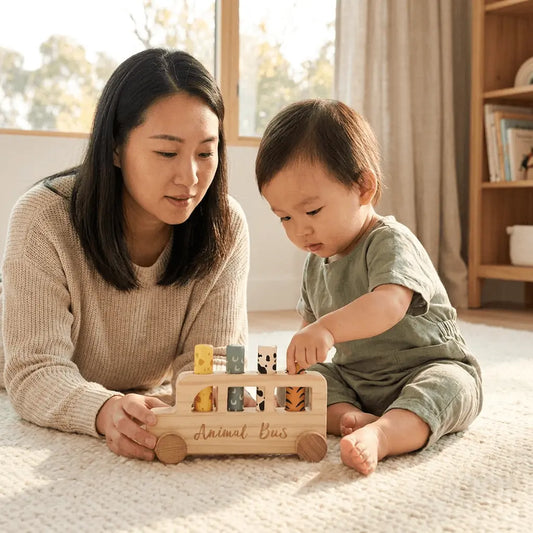
A wooden car does not need much to become part of a child’s day. One push across the floor can turn into a race, a delivery, a trip to the station, or a journey across the room.
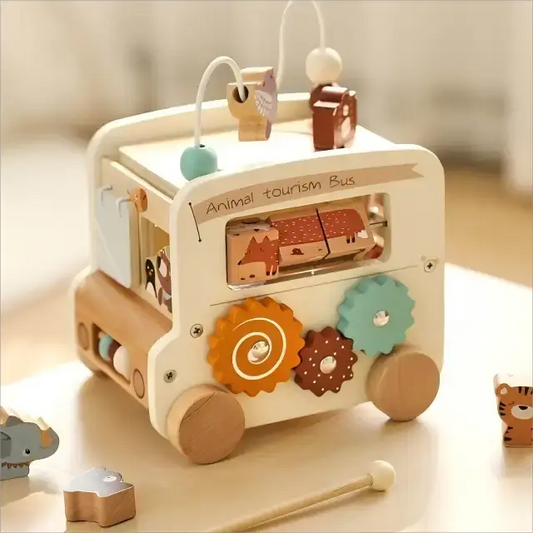
This collection is made for simple movement play: cars that roll, trains that travel, boats that cross imaginary water, and airplanes ready for make-believe takeoff. Each piece gives children something easy to understand and open enough to use again in a new way.
Yes, wooden toy cars can be a good choice for toddlers when they are smooth, easy to grip, and age-appropriate. The simple rolling movement is easy to understand and can support repeat play, hand control, and early pretend play.
Push toys move when a child pushes them forward by hand. Pull toys usually have a string or handle so children can pull them along as they walk. Both types encourage movement, tracking, and simple cause-and-effect play.
Age suitability depends on the specific toy. Larger, simple wooden cars may suit younger toddlers, while smaller vehicles, pull-along toys, or sets with multiple parts may be better for older toddlers and preschoolers. Always check the product page and supervise play.
They can fit well in a Montessori-inspired home when they are simple, realistic, and child-led. A wooden car gives children a clear action to repeat without lights, sounds, or electronic controls.
A wooden car does not need many features to become part of everyday play. Children understand it almost immediately: push it, roll it, chase it, turn it around, and send it off again.
That simple movement is what makes wooden toy vehicles easy to return to. A train can carry blocks across the room. A race car can wait at a starting line made from books. A boat can cross a blanket ocean. An airplane can take off from the edge of the sofa.
These toys leave space for children to add the story themselves. They work well for quiet floor play, sibling play, pretend roads, small-world setups, and those quick little moments when a child just wants something satisfying to move.

Join now and get a 20% off coupon code for your first order.
M : S
Your first order discount code is
Code copied successfully!